Dutch Interior Styling: 5 Ways to Balance Light and Privacy
Dutch Interior Styling: 5 Ways to Balance Light and Privacy Imagine arriving for Sunday lunch. From the hall you can see a blue jug on the dining table and your friend…
Dutch Interior Styling: 5 Ways to Balance Light and Privacy
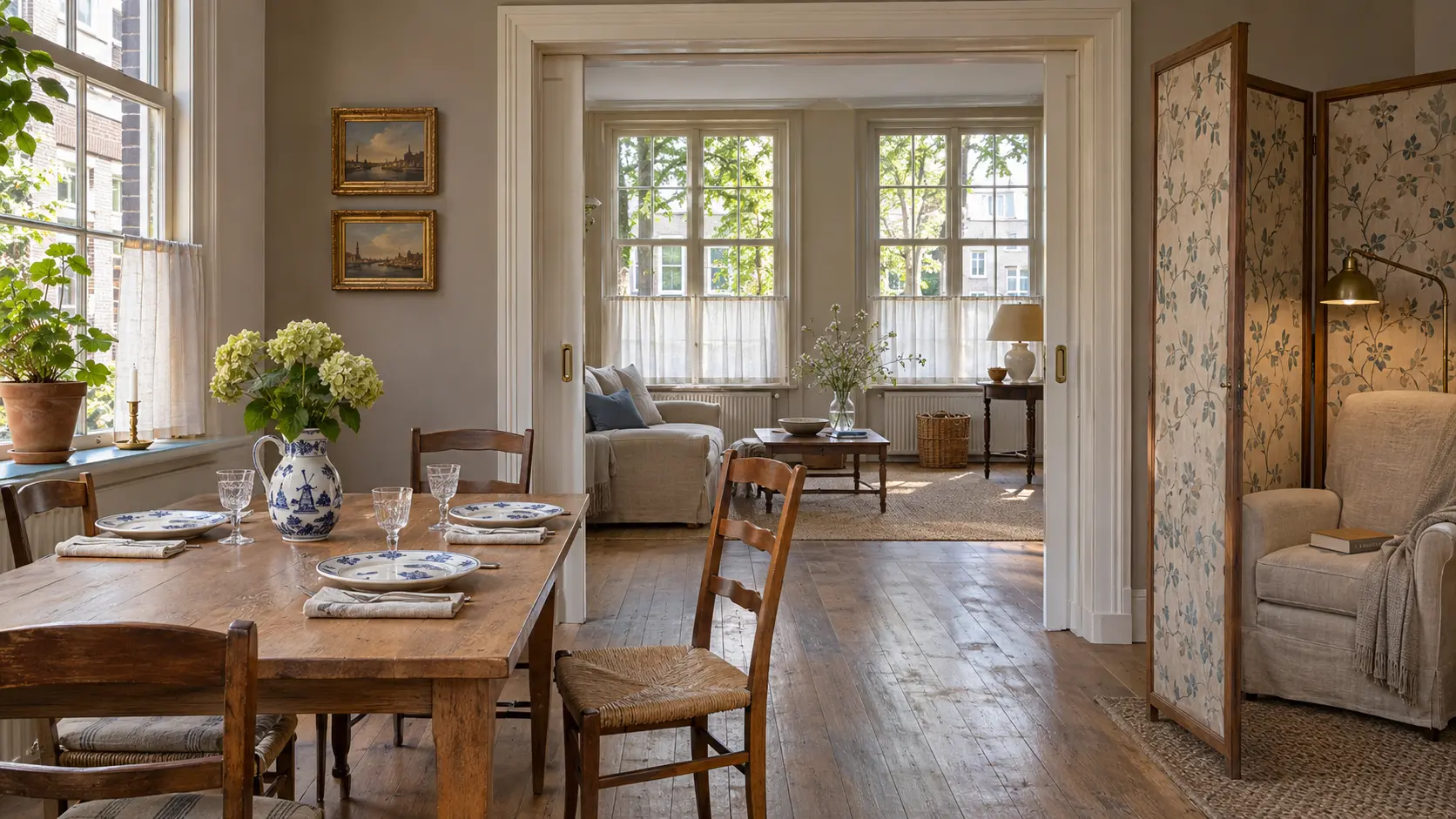
Imagine arriving for Sunday lunch. From the hall you can see a blue jug on the dining table and your friend pulling out a chair. A little painting beside the doorway catches your eye. Only later, when someone goes looking for a book, do you discover the armchair tucked behind the sitting room door.
The spaciousness of the reception areas, the connection between spaces, the natural light, and the integration of the art collection reflect a balance between hosting, sharing, and enjoying privacy. That sounds like a brief for a large house, but it describes something a small flat can do beautifully. These five Dutch interior styling ideas start with the furniture, windows and pictures you already own. Try them in whichever room has to work hardest when friends come over.
1. Give the reception room an easy route for guests
Map the walk from the front door to the sofa
Carry two empty cups from the kitchen to your usual seat. Notice where you turn sideways, lift a cup over a chair or ask somebody to move their knees. That spot deserves your attention first. In a narrow reception room, shifting a coffee table towards the far end of the sofa can open a direct route along one side. Try the walk again while somebody is actually sitting there. A layout can look generous on paper and feel quite different with feet on the floor.
Arrange living room seating around a conversation
Start with the people who most often share the room. If two of you sit side by side watching television, leave the sofa where you like it and turn one loose chair towards its nearer end. Now a visitor can join you without sitting in a row. Put a small table within reach of that chair and sit down yourself. Can you set a glass down comfortably? Can you see both faces when a third person speaks? Those answers will tell you more than a matching furniture set ever could.
Give coats and serving dishes somewhere to land
At a small gathering, a coat on every chair can use up half the places you meant to offer. Empty a few hooks before anyone arrives and put a tray on the sideboard for drinks. Meanwhile, keep the dining table free for the food people want to pass. If dinner regularly stretches into the evening, try setting the table with your largest serving bowl first. You can build the place settings around it using these dining room ideas for long family dinners.
2. Connect living and dining spaces through the doorway
Choose a sightline worth keeping open
Stand in the hall with the sitting room door open. What do you see at its far end? In two adjoining rooms, a glimpse of a garden or a painted cabinet gives the eye somewhere to rest. Experiment with moving one tall object out of that view. For instance, a bookcase tucked against the wall beside the opening might hold exactly as much as before while letting you see the window from the front door. Leave space for the door to swing fully.
Before hanging a mirror, ask someone to hold it in place. From the sofa, check whether it reflects the garden or washing-up beside the kitchen sink.
Repeat Delft blue in two different materials
A blue and white jug is a lovely starting point because you can carry it between rooms until you find a place where the pattern reads clearly. Give it one companion visible through the doorway. Try an indigo cushion in the sitting room or blue stitching on the edge of a dining cloth. A slight difference in shade lets each piece keep its character. For more ways to use ceramics alongside everyday furniture, explore our guide to Delft blue and Dutch interior styling.
Use low storage to mark where one room ends
In a single living and dining room, a low sideboard can do the work of a doorway. Set it against a wall where the dining area begins, and keep plates and napkins inside. The top becomes a place to put a cake down while someone clears the table. Before committing, pull the nearest dining chair all the way back and open a cupboard door. If the two collide, sliding the cabinet along the wall is easier than negotiating that corner every evening.
3. Bring natural light into the places you use
Follow the daylight from breakfast to late afternoon
One Saturday, look at the same seat over breakfast, after lunch and towards evening. Perhaps the back room is dull at ten but catches a lovely patch of sky at four. Put your reading chair there for a week. Meanwhile, watch what happens at the dining table when the sun drops. A seat with a beautiful view can leave its occupant squinting across lunch. Turning the table a quarter turn may let both people see each other comfortably.
Choose window coverings for street-level privacy
In a street-facing flat, decide where the unwanted view actually begins. Sit on the sofa while someone you know stands outside. You might find that a café curtain across the lower pane screens the armchair while leaving the sky visible above it. After dark, repeat the test with the room lamps on. A daytime sheer may reveal more than you expect. A second curtain you can draw in the evening gives you a choice about when the room opens to the street.
Share the best window between two activities
If the only bright window belongs to the dining area, let its table earn its place between meals. Keep a shallow drawer nearby for pencils, paper and the crossword. Then you can work there during the morning and clear it in time for lunch. If you would rather have a window seat, pull a dining chair across while the table is empty. Light-filled living spaces can change with the hour, even when the heavier furniture stays exactly where it is.
4. Display an art collection where people can enjoy it
Hang a favourite painting where daylight stays indirect
A painting can look wonderful opposite a window on a cloudy morning, yet sit in a shaft of sun after lunch. Check the wall at different times before choosing it. Light damage accumulates, so keep paintings away from direct sunlight and give treasured pieces a spot with less prolonged exposure. A shaded interior wall visible from the sofa can be a better place to enjoy the colours. The Canadian Conservation Institute explains how exposure affects paint in its guide to caring for paintings.
Plan an art grouping from a seated viewpoint
Cut paper templates the size of your frames and try them on the wall. Begin with the picture you most want to see from your favourite chair. Arrange the smaller ones around it, then take your seat again. If the lampshade hides half a drawing, you can shift a piece of paper without making a hole. In the dining area, check the same view across an occupied table. A small portrait often works beautifully on the wall beside the table, close enough to notice an expression.
Give guests a way into the collection
Put something with a story in a shared room. A sketch of the bakery near your first flat gives a guest an easier opening than a perfectly coordinated row of prints. You might place it where people pause on the way to dinner. Keep more intimate pieces wherever you enjoy them alone. A family drawing beside the bed can matter just as much as the largest canvas in the house.
5. Keep a private corner in a home made for hosting
Turn a reading chair away from the main route
Place a chair with its back partly towards the busiest doorway and its seat facing something you enjoy. Give it a lamp you can switch on from the chair. Now somebody can read while a friend lays the table nearby. If attention keeps drifting towards the kitchen, try changing the angle just enough to take the sink out of view.
Choose a door or screen to suit the privacy you need
A folding screen can hide a desk full of paperwork when dinner guests arrive. For a confidential call, however, choose a room with a door that closes and check what carries through it. In a studio, agree on a quiet hour or take calls elsewhere when someone needs uninterrupted rest. Furniture can change what people see. Shared routines help with what they hear.
Conclusion : try the layout during one ordinary evening
Invite someone over for soup, leave a book in the reading chair and see how the evening unfolds. Notice where your guest sets their coat, which picture starts a conversation and whether either of you can slip away comfortably. Keep the change that made dinner easier. The next time you have the place to yourself, settle into that quiet chair and enjoy the view you saved for yourself.
Found this useful? Save it for later.