How to Build a Room Around One Vintage Find You Love
How to Build a Room Around One Vintage Find You Love You bought the sideboard because of the handles. Two shallow scoops in dark walnut, rubbed smooth where somebody…
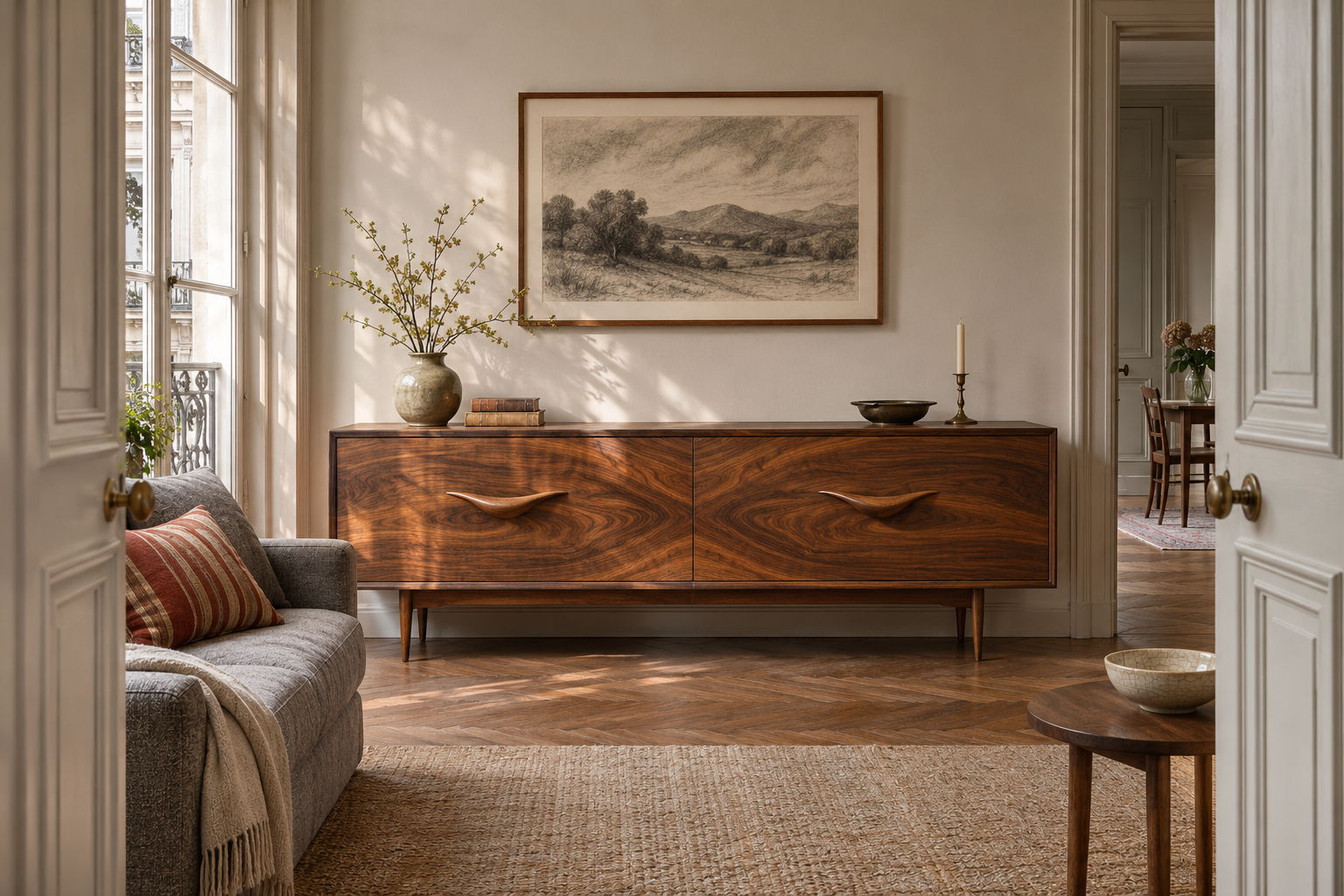
You bought the sideboard because of the handles. Two shallow scoops in dark walnut, rubbed smooth where somebody opened the doors every evening. Now it’s in your sitting room, and the grey sofa you’ve happily lived with for years suddenly looks a little chilly.
If you’ve been wondering How to Build a Room Around One Vintage Find, start with what made you stop and look. Those handles can help you choose a lamp, but they needn’t dictate the curtains, the chairs and every picture frame. Here’s how to let one good piece guide a room, using furniture you own and leaving yourself a few pleasant decisions for later.
Give your vintage find a role in the room
Name the detail that caught your eye
Finish this sentence aloud. “I would still want this piece even if…” Perhaps you’d love the sideboard in a different wood because those curved handles feel so good in your hand. Perhaps it’s the sweep of grain across the doors that you’d miss. That distinction matters. In the first case, a rounded lampshade might pick up what you love. In the second, you might choose a plain rug so you can enjoy the grain from the sofa.
Put vintage furniture to everyday use
Decide what the sideboard will hold before deciding what goes above it. If it stores records, pull one out, turn towards the player and set the sleeve down. That small rehearsal tells you which end of the top needs to stay clear. If it holds table linen, try opening a cupboard door while the dining chairs are occupied. A piece you reach for every day soon feels at home, even while the wall above it is still bare.
Adapt the idea to a vintage rug, chair or print
A rug gives you a different starting point. Unroll it where you can see the border, then bring over one chair and notice which threads come alive beside the upholstery. For a framed print, carry it around the room and see where you can enjoy its finer marks. A vintage armchair needs an equally personal test. Sit down with a book. The side where your hand naturally reaches for a cup is where the first companion piece belongs.
Plan a room layout around your vintage focal point
Find the best view of a statement piece
Stand in the doorway, then sit where you usually spend an evening. From one position you might see the whole sideboard, while from the other a sofa arm hides its beautiful legs. Move the armchair a little and look again. A side wall can make a particularly good home for a long piece because you see its depth as you enter. If carrying the piece is awkward, use boxes to stand in for its height and footprint.
Leave space for drawers, doors and guests
Mark the front edge of the sideboard on the floor with a length of string. Add a newspaper sheet to represent an open door. Now walk through carrying something wide, such as a tray for four. Could a guest linger beside the cabinet while you pass? Try shifting the coffee table towards the sofa before ruling out the wall. A few centimetres gained where two people pass can matter more than a generous gap nobody uses.
Work with the architecture of adjoining rooms
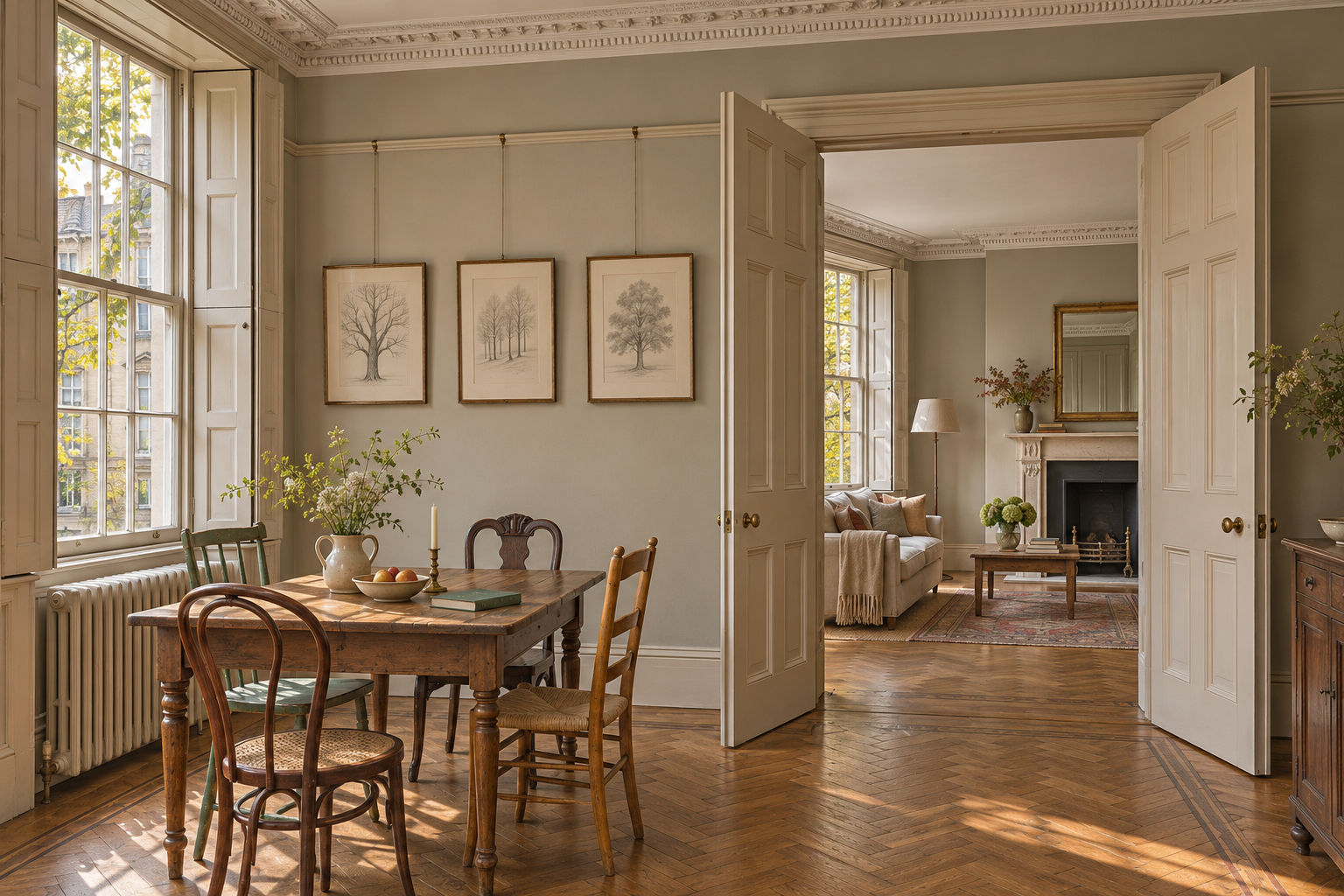
Look through the open doors from the next room. A sideboard framed by the opening can draw you towards the sitting area, and a low piece leaves the window beyond in view. Check the arrangement with the doors closed as well, especially if somebody uses the room for a quiet evening or an overnight stay. In an older flat, our guide to what to keep when renovating a period apartment can help you decide which original features to give prominence.
Build a colour palette from your vintage piece
Read the undertone of wood in natural light
Hold a sheet of white paper beside the walnut. Against that plain edge you may spot a reddish streak, a honey-coloured patch or a cooler brown near the feet. Find the colour again in something you own, perhaps a rust binding on a book. Then carry both to the grey sofa. You’re looking for a small connection that makes the two larger pieces comfortable together. A cushion with a narrow rust stripe might do all the work you need.
Test wall colours beside the vintage finish
Paint two generous pieces of card and stand them upright behind the sideboard. Leave a strip of the existing wall visible between them so you can judge each colour separately. A chalky blue might bring out the warmth of the timber during the afternoon. Later, under your reading lamp, the same blue might turn dull while a putty shade gains depth. Choose at the hour when you most enjoy the room. Keep the second card for another wall.
If you rent, the same experiment works with the colours you can change. Hang a length of fabric over the back of the sofa and prop a framed poster against the wall for an afternoon. Photograph the view in daylight. Later, compare it with the room as it was and decide which change you would miss most.
Borrow a quiet colour from a patterned find
With a bold rug or print, look towards its edges. The thin olive outline around a red flower can give you a gentler starting point for curtains than the red itself. For example, hold an olive shirt beside the window frame and leave it there through lunch. Still want red? Bring it back in something movable, such as a painted tray. You can enjoy the full pattern on the floor and decide how much colour you like at eye level.
Mix vintage and modern furniture through shape and texture
Repeat a silhouette across different materials
Return to those scooped handles. A shallow ceramic bowl on the opposite table can echo their curve without adding more walnut. For a piece with straight legs and open spaces, try a contemporary chair with a similarly spare outline. Notice how much of the wall you can see through the furniture. For an example worth studying, look at the spaces between the shelves and legs of Edward William Godwin’s sideboard in the V&A’s guide to furnishing the Aesthetic home.
Balance polished wood with everyday fabrics
Set a few things you already own beside the cabinet. Try a linen napkin, a wool throw and the smooth cotton cover from a cushion. Each catches light differently. A coarse weave beside glossy doors makes the reflection in the wood easier to see. Meanwhile, a tightly woven fabric beside a heavily carved chair gives your eye somewhere to rest. Borrow a throw from the bedroom for a week before ordering upholstery from a tiny square of cloth.
Spend first on the missing companion piece
Once the sideboard, sofa and rug are together, write down what you still reach for. Perhaps the chair needs a lamp for reading, or guests need somewhere to set a glass. Give that purchase a short brief. “Round table, lower than the chair arm, wide enough for two cups” is something you can take to a flea market. Bring your tape measure and a photo from the doorway. An appealing bargain earns consideration when it fits that particular gap.
Finish the vintage room with art and light
Hang art where you can enjoy it
Cut paper to the outside dimensions of your favourite frames. Arrange the templates above the sideboard, then sit down across the room. A small drawing may look lost there yet be lovely beside the chair, where you can see individual pencil strokes. In its place, try one larger work or bring two related prints closer together. Leave room on the cabinet for the things that actually land there, including a vase with stems taller than you first imagined.
Light the furniture and the people beside it
Wait until dusk and turn on one lamp. From the sofa, check whether its shade throws a bright reflection across the framed art. Move it towards the end of the cabinet and look again. Across the room, a separate reading light lets someone settle into a book while conversation carries on by the doors. Try both lights together. You should still be able to see a friend’s expression and pick out the walnut grain behind them.
In conclusion, let the vintage find settle in
Give the room an ordinary week before filling the last empty corner. Watch where people sit and which objects migrate. The bowl you chose for its curve may end up holding keys, and the sideboard might become the place a friend leans while telling you about their day. When you can still see the detail that drew you in, and the people you live with have found their own uses for the piece, the room is yours.
Found this useful? Save it for later.