How to Bring Daylight Into a Long, Narrow Apartment: 5 Ways
How to Bring Daylight Into a Long, Narrow Apartment: 5 Ways At breakfast, the windowsill is bright enough to show every crumb on your plate. Two chairs down, someone has…
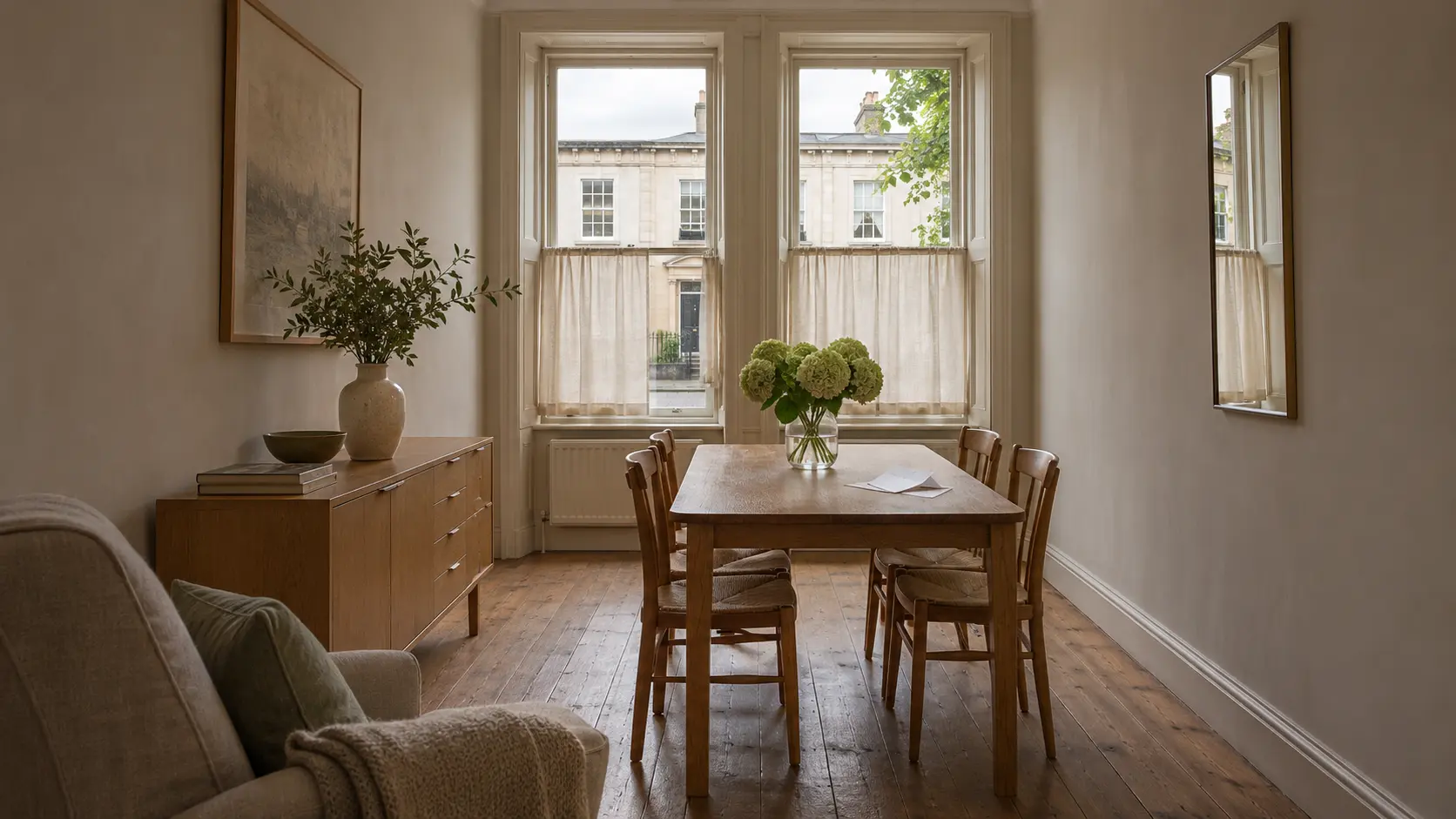
At breakfast, the windowsill is bright enough to show every crumb on your plate. Two chairs down, someone has switched on a lamp to read the post. If you’re wondering how to bring daylight into a long, narrow apartment, that difference is a good place to start. Take the envelope to the window, then walk slowly back with it. Where does the print become difficult to read? Look up. What sits between that spot and the sky?
Picture a flat with two tall windows on the same short wall, a sitting area at the front, a table in the middle and a hall at the back. We’ll work through it from front to back. You can try most of the changes with things you own, and you can judge each one from the chair where better light would make a difference.
1. Map the natural light in your narrow apartment
Find where useful daylight falls away
Draw a rough rectangle on scrap paper and mark the windows, doorways and larger pieces of furniture. At breakfast, lunchtime and late afternoon, note where you can read comfortably with the lamps off. Use the same page each time. Mark glare separately. A patch of direct sun might be too dazzling for a laptop, while the seat just beside it gives you lovely light for writing. If possible, repeat the exercise on an overcast day. That second sketch shows which spots you can count on through a grey week.
If your flat has windows at both ends, repeat the exercise from the other direction. A courtyard window may give the middle of the room soft afternoon light long after the street side has fallen into shade.
Check the view of the sky from the dark end
Sit where the flat feels dimmest and look towards the window. Can you see sky above the rooftops, or mostly curtain, cupboard and the balcony overhang? Stand up and look again. If the sky appears when you stand, an obstacle inside the room may be cutting off light at chair height. If a building opposite fills the window from both positions, your options are different. You can still make better use of the light near the glass and give the far end a job that suits it.
Pick one spot to brighten first
Choose a specific annoyance. Perhaps your child always carries their drawing to the sill to tell dark green from brown. Move the drawing paper along the table until the colours are easy to distinguish. Even swapping the pencil tin and fruit bowl could put the brightest place within reach. Give that small change a day before tackling the whole room. You’ll have a better idea of what matters when you start moving heavier things.
2. Let more daylight through the apartment windows
Pull open curtains clear of the glass
Open your curtains as far as they usually go, then gather one panel in your arms. Look at how much glass its folds were covering. In a narrow room, two generous curtains can occupy a surprising share of the only window. If there’s spare wall beside the frame, a longer rail can give the fabric somewhere to sit during the day. Before buying one, check that the open curtains will clear the window handle and leave the radiator free.
Keep the upper window clear and the lower pane private
For a street-facing flat, try a piece of cloth across the lower pane while someone stands on the pavement. Raise it only until the view of your usual seat disappears. That height gives you a starting point for a café curtain or an adjustable blind, and leaves the upper glass open to the sky. Test the arrangement again after dusk with a lamp on. If silhouettes become visible, keep a fuller curtain for evenings and draw it back over breakfast.
Thin out the windowsill one object at a time
A row of herbs, a drying rack and a large plant might all need that window. Move the tallest item first and look from the dining table before shifting anything else. For example, a citrus tree might catch just as much light beside the window while its canopy leaves the upper pane clear. Keep the herbs you use within reach of the kitchen. The aim is to recover the part of the opening that makes a difference without losing the pleasures of having a sill.
3. Rearrange the long living room to share the light
Turn tall storage along a side wall
A bookcase across the width of a flat makes an effective divider, especially when you want to hide a desk. Once full, however, its back becomes a wall between the window and the next room. Imagine turning the bookcase against a long wall and marking the divide with a rug instead. First, take the measurements and mark its footprint with paper. Check cupboard doors and the route to the kitchen. For more furniture arrangements, see these small Scandinavian living room layouts.
Give the dining table a daylight end
In our example flat, the table sits crossways behind the sofa. Try rotating it so one short end points towards the windows. For breakfast or homework, two people can sit near that end with light falling across the tabletop. When friends come, the remaining places are already there. Pull the chairs out and carry a serving dish past them before settling on the arrangement. A table works best when the host can join the conversation as easily as everyone else.
Borrow light through an adjoining room
If there’s a door between the sitting room and the hall, compare the hall with the door open and closed. A noticeable difference suggests that glazing could help if you plan to renovate. A glazed panel above the door, called a transom or fanlight, can pass light while the solid door below preserves a private view. Ask a qualified local professional about the existing door and any fire requirements before altering it. In a rental, arranging daytime activities around an existing opening may be enough.
4. Use pale surfaces and mirrors to brighten the middle
Sample paint on the wall that receives daylight
Take a large sheet of white card to the wall halfway down the flat. Move it from one side to the other and watch where it picks up the most light. That’s a promising place to try pale paint. Brush samples onto two pieces of card and leave them there through the afternoon. A warm white that suits oak flooring might look yellow beside cream cupboards. For a plain-language explanation of how pale surfaces reflect available light, see Your Home’s guide to lighting.
Test a mirror from your usual seat
Ask someone to hold a mirror against a side wall while you sit at the table. Shift it until the reflection catches a patch of sky or the softly lit window recess. A mirror can give the middle of the flat a glimpse outdoors even when the view down the room is partly blocked. Check the reflection at the hour you use that seat. If it puts bright sun in your eyes or gives the street a view into a bedroom, choose another position.
Display art along the shaded return wall
The small wall just inside a doorway can make a good home for a print you pass every day. Check it for direct sun as the day goes on, especially if you’ve added a mirror nearby. Watercolours and coloured inks can fade with exposure. Keep a treasured original in a sheltered spot and let the brighter wall carry light back into the room. The Canadian Conservation Institute offers guidance on displaying works of art on paper.
5. Make the darker end of a narrow flat work
Match the quiet corner to the available light
The back of the flat may be a lovely spot for listening to music or making a phone call. A comfortable chair, a shelf for records and a lamp within reach give it a purpose of its own. Meanwhile, a folding desk near the window can serve someone who draws or sews during the day, then close when guests arrive.
Add task lighting where daylight runs out
At the hall cupboard, aim a small lamp towards the contents so you can tell navy gloves from black ones. At the kitchen counter, check where your shadow lands when you chop. A light beneath a wall cabinet can reach the chopping board while you stand in front of it. Both changes make the darker end easier to use on winter afternoons.
Conclusion : keep the change you notice tomorrow
Tomorrow at breakfast, take that envelope back to your usual chair. See whether you can read it, whether a neighbour can see in and whether everyone still has room to pass. Keep what helps. Sometimes the nicest result is simply discovering that the seat you gave to a houseplant is exactly where you’d like to have your coffee.
Found this useful? Save it for later.